Culture+

High-Performing Teams · Psychosocial Safety Workshop

Leading performance safely and sustainably

A three-hour, customised workshop for leaders in high-performance environments. Leaders learn to tell productive pressure apart from preventable psychosocial risk — and to design and lead work in ways that sustain results, retain capability and meet their legal duties.

C+

The premise

Standards stay high. The risk is managed in how work is designed and led.

Strategic positioning

Psychosocial safety is a condition of sustainable high performance.

High-performance environments are built on demanding standards, ambitious expectations, strong individual accountability, candid feedback and disciplined execution. Well designed and well led, those conditions attract and retain high-calibre people, sharpen decision-making and deepen client confidence.

They also carry foreseeable psychosocial risks — some structural, arising from how work is designed and managed; others emerging from the way sustained pressure shapes behaviour, relationships and people's willingness to raise concerns. These risks are characteristic of funds management, investment banking, law and professional services, and they are recognised hazards under Australian work health and safety law.

Keep pressure productive
Demanding work supported by sufficient capacity, clear priorities, appropriate autonomy and planned recovery.
Protect scarce capability
Burnout, absence and presenteeism erode the energy, attention and judgement high performance depends on.
Meet the duty properly
The hierarchy of controls prioritises elimination and work redesign over administrative fixes and individual coping.

Reform-grade Respect at Work, delivered at the heart of government.

Trusted at the highest level.

NSW Parliament

Culture Plus Consulting was engaged by NSW Parliament to design and deliver Respect at Work and Trauma Informed Response training across its workforce — a flagship reform initiative responding to the Broderick Review of bullying, sexual harassment and sexual misconduct in NSW parliamentary workplaces. This engagement represents a proud achievement in delivering reform-grade Respect at Work training in high-scrutiny environments.


Parliament of New South Wales

NSW Premier's Department

In an ongoing engagement, Culture Plus Consulting delivers Respect at Work training to the Premier, Ministers and Ministerial staff — a key recommendation of the Goward Review aimed at building respectful, safe and accountable workplaces at the heart of government.

Premier's Department NSW

Programme snapshot

What you need to know at a glance.

People leaders, team heads, partners, directors and executives in high-performance commercial environments — funds management, real estate and investment, banking, law, consulting, accounting and professional services.

Contact us to explore a tailored workshop

Endorsed capability partner

Trusted by Australia's peak HR body.

Australian HR Institute (AHRI)

Culture Plus Consulting is proud to design and deliver flagship DEI programmes for the Australian Human Resources Institute (AHRI) — Australia's peak HR professional body — supporting HR leaders and practitioners to build capability for inclusive leadership and organisational change.

Connect with us to explore how evidence-based DEI training can help your organisation build capability, strengthen culture, and deliver meaningful, measurable change.

How this differs

Where this sits alongside our other psychosocial programmes.

Culture Plus runs several programmes that touch psychosocial risk. They are not interchangeable. This one is purpose-built for organisations that intend to remain high-performance and need their leaders to keep pressure productive rather than harmful.

01

Written for cultures where demanding standards and strong individual accountability are deliberate design features — not problems to be dismantled.

02

Starts from the business case for the high-performance model, then names the foreseeable risks it carries. Leaders are not asked to trade performance for safety.

03

Concentrates on the hazards that cluster in high-pressure commercial settings: role overload, low job control, poor role clarity, inadequate recognition, procedural injustice, conflict and interpersonal harm.

04

Treats leader behaviour under pressure as a control in its own right — including how standards are held, how feedback is given and how a leader's own stress response sets the emotional tone.

05

Extends to third parties, client interactions and work social events, where power imbalance and alcohol elevate risk.

06

Three hours, single session, senior-audience pacing — built to be practicable for leaders who cannot be released for a multi-day journey.

Choosing the right programme

This programme · Leading Performance Safely

Sustaining performance in a demanding culture without creating psychosocial harm.

Leaders in high-performance commercial environments.

High performance is the context and psychosocial risk must be managed within it.

Broad capability build across the fifteen recognised psychosocial hazards, hazard identification, risk assessment, controls and consultation.

All people leaders and managers, any sector.

You need a whole-of-organisation baseline in psychosocial risk management.

Mental health as an operational safety competency — recognising early warning signs, supportive conversations, mental health risks that originate outside work.

Operational and frontline leaders where poor mental health is a safety risk.

Human-factor risk, fatigue and impaired judgement drive incidents.

Team climate: speaking up, admitting error, challenging decisions, learning from failure.

Intact teams and their leaders.

Silence, low candour or poor learning from mistakes is the presenting problem.

Positive Duty, sexual harassment and sex-based harassment prevention, receiving disclosures, bystander action.

People leaders with conduct responsibilities.

Respect@Work compliance and conduct prevention is the driver.

These programmes are complementary. Many clients run this workshop for senior commercial leaders and our broader psychosocial safety leadership programme across the wider management population, or combine all three streams through the integrated Safety · Respect · Inclusion pathway.

What's at stake

The cost of unmanaged psychosocial risk is concrete and cumulative.

01

The performance cost

Chronic high demands without adequate resources or recovery contribute to burnout, absence and presenteeism. Over time these conditions diminish the energy, attention and judgement high performance depends on, put the retention of sought-after people at risk, and reduce capacity exactly when it is most needed.

02

The interpersonal cost

Unmanaged pressure creates the conditions for interpersonal harm. Sustained stress, competition, power imbalance and a culture where raising concerns feels risky are recognised risk factors for bullying and harassment — damaging the trust and collaboration high-performing teams depend on.

03

The legal obligations

Employers must protect psychological as well as physical health and eliminate or minimise psychosocial risks so far as is reasonably practicable, prioritising elimination and work redesign over administrative responses and individual coping. The Positive Duty requires proactive measures to eliminate sexual and sex-based harassment, sex discrimination and related conduct.

Sustaining high performance requires treating psychosocial risk management as a practical leadership capability, built into how work is designed and led. The legal obligations reinforce this.

Programme architecture

Three hours. Four modules. One case.

A single continuing scenario runs across the modules, developing with each session so the learning compounds. The case is drawn from your operating context and co-designed before delivery.

Why does psychosocial safety matter in a high-performance environment, and what are leaders responsible for managing?

  • The legal and performance case for psychosocial safety
  • The fifteen recognised psychosocial hazards, and which cluster in high-pressure commercial work
  • The hierarchy of controls as the organising framework
  • Obligations under WHS and anti-discrimination law, including the Positive Duty
  • Moving from "How is this person coping?" to "What in the work is creating risk?"

What leaders leave with

Capability, not awareness.

  • Identify which psychosocial hazards are present in their team's work, and where they cluster
  • Apply the hierarchy of controls, prioritising work redesign over individual coping responses
  • Design, protect and promote recovery time as a genuine control
  • Consult their team on psychosocial risk and close the loop on what they hear
  • Hold high standards and manage performance without amplifying psychological harm
  • Recognise and regulate their own stress response before it sets the tone for the team
  • Run proactive check-ins, recognise masked distress and respond without overstepping
  • Intervene proportionately as a bystander before harm escalates or becomes normalised
  • Resolve early conflict through a structured conversation, before it hardens into a formal complaint
  • Know what sits outside their authority and escalate promptly and appropriately

Practical toolkit

Tools leaders take back to the desk.

Every framework used in the workshop is provided as a practical, one-page tool. Leaders leave with specific, low-burden commitments to their teams — the transfer mechanism that turns a session into a capability shift.

The 15 psychosocial hazards

Work design and management, interpersonal, and traumatic content and environment hazards, in one reference.

The hierarchy of controls

Elimination through to individual support, with worked examples of higher-order controls for each hazard.

Four diagnostic questions

What are we noticing? What is creating the hazard? Who is exposed, how often and how severely? What can we change?

Consulting your team

A structured approach to consultation on psychosocial risk, including what to escalate and when.

Self-regulation under pressure

A five-step sequence for leaders to steady themselves before responding to a difficult interaction.

Safe performance management

Six principles for holding standards and giving feedback without amplifying harm.

Leading without amplifying strain

Six trauma-informed leadership principles adapted for a commercial leadership context.

Checking in and responding

What to ask, what not to say, and how to receive a disclosure safely and refer.

The conduct spectrum

Distinguishing incivility, microaggressions, unlawful conduct and serious misconduct — and why the base matters.

Active bystander strategies

Direct, distract, delegate and delayed responses, including third-party and social-event settings.

Safe work events

Before, during and after obligations for work functions, alcohol and client entertaining.

Am I creating or controlling risk?

A closing self-diagnostic that turns the programme into a personal leadership commitment.

Regulatory alignment

How this supports your legal obligations.

The duty to protect psychological as well as physical health, and to eliminate or minimise psychosocial risks so far as is reasonably practicable — applying the hierarchy of controls and consulting workers on risk.

Controls taught in the workshop are consistent with the SafeWork NSW Code of Practice: Managing Psychosocial Hazards at Work. They are indicative rather than prescribed — duty holders must assess and control risk based on their own circumstances. For background reading, see our psychosocial hazards guide, risk assessment guide and ISO 45003 guide.

Measuring impact

Leading and lagging indicators.

Leading indicators

Early signals of change in leader behaviour

Leader confidence and knowledge
Measured through optional pre/post evaluation across the cohort.
Behaviour-change intention
Specific commitments leaders make to their teams, reviewed at follow-up.
Earlier intervention
More hazards raised, controlled or escalated before they become complaints or claims.

Lagging indicators

Downstream outcomes visible at organisational level

Reduction in psychological injury claims
Fewer claims linked to workload, conduct or leadership behaviour.
Fewer psychosocial WHS notices
Reduced regulatory attention and fewer investigations.
Decreased stress-related absence
Lower absenteeism and presenteeism linked to workplace stress.
Improved retention in high-demand roles
Stability in the roles hardest and most expensive to replace.

Moving forward

Pilot first. Then rollout.

Organisations work within real constraints — time away from delivery, budget, logistics and operational pressure. The programme is designed around your context so impact is maximised within what is actually available to you. Optional pre/post evaluation design and reporting is available.

  1. 01

    Appointment and discovery

    We meet your stakeholders, review relevant risk, engagement and conduct data, and confirm the leadership behaviours you need to shift.

  2. 02

    Co-design

    Scenarios, language, examples and tools are built around your operating environment, values and risk profile.

  3. 03

    Preparation

    Facilitator briefing, participant pre-work and logistics agreed within your operational constraints.

  4. 04

    Pilot cohort

    One representative cohort completes the full workshop — approximately four to six weeks from appointment.

  5. 05

    Refine and sign off

    Participant feedback, facilitator refinement and your sign-off on the final design.

  6. 06

    Rollout

    Subsequent cohorts on the agreed schedule, each with a post-delivery debrief and an optional 60-day follow-up check-in.

Design and facilitation

What separates a training event from a capability shift.

Psychological safety

Sessions are facilitated so senior leaders can be candid about their own behaviour under pressure without exposure or judgement. That candour is where the shift happens.

New · Consolidated leader program

Culture+|Safety. Respect. Inclusion.

A unified leader pathway. One specialist, one continuing case scenario, and 6.5 live hours across three integrated modules — psychosocial safety, respectful workplaces and inclusive leadership — replacing three separate programs with one compounding capability build.

01Safety
02Respect
03Inclusion

Selected work

Swipe →

Trusted partners

Leadership capability clients.

"
Felicity, you are always excellent and have such a lovely way of running the workshops. You are the clear authority in the room and yet never make anyone feel wrong or uninformed — it's great to watch the way you manage the content and people. You are very generous and create a great space.
Rebel Neary
Head of Strategy & Engagement, Office of the President
NSW ParliamentNSW Parliament
1 / 3

Our methodology

The Practical Capability Model

Every Culture Plus programme is built on the same evidence-based methodology. Hover any step for detail:

MapBuildWireTransferTest

Your facilitator

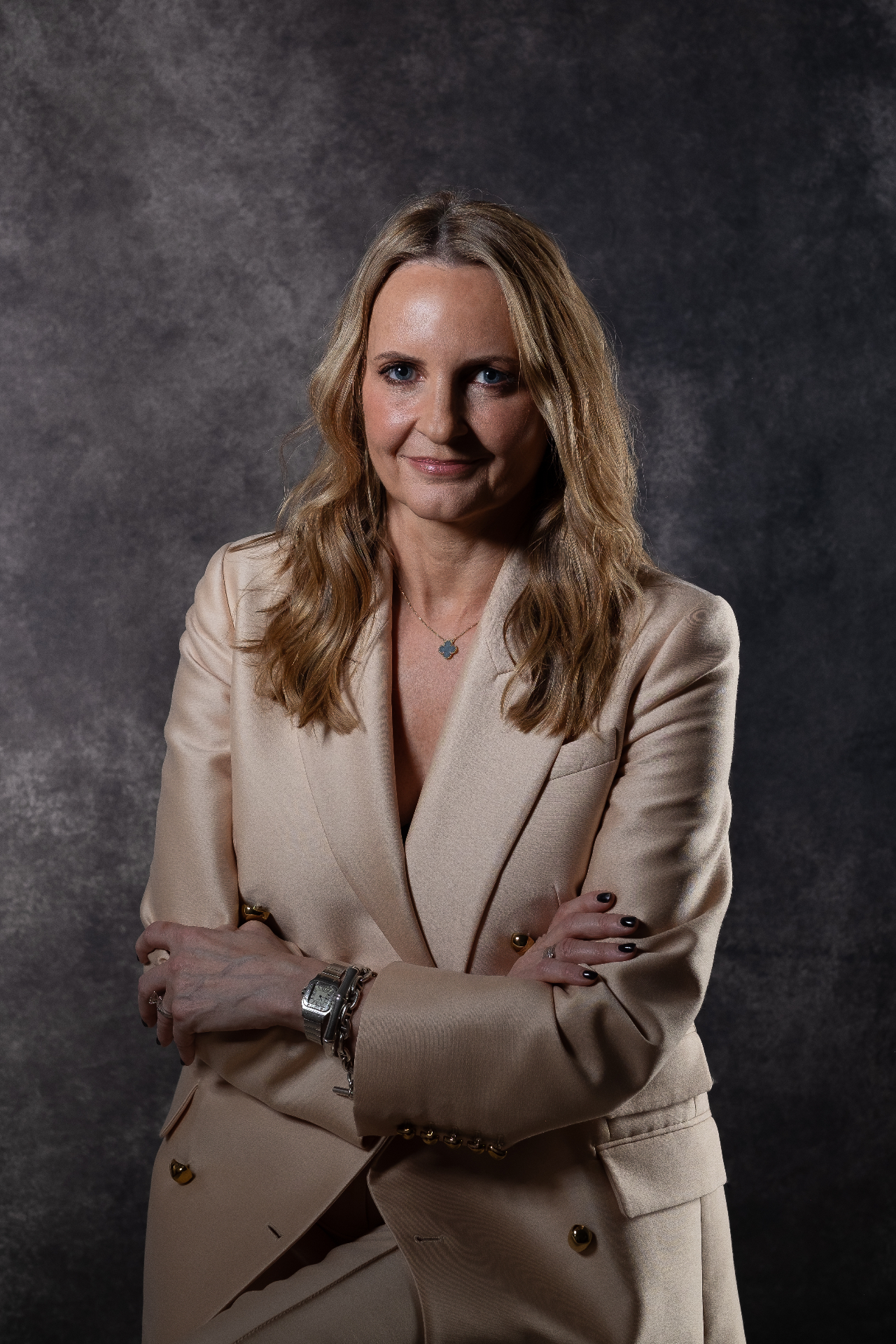
Felicity Menzies, Founder of Culture Plus Consulting

CEO, Author and Principal Consultant

Felicity Menzies

Every Culture Plus engagement is delivered with behavioural rigour and practical relevance by Felicity Menzies — organisational psychologist, author, and specialist facilitator, and a former senior executive in financial services.

Role
Founder, Culture Plus Consulting
Qualification
Bachelor of Arts (Psychology) — University Medallist; Fellow, Chartered Accountants Australia and New Zealand; Bachelor of Commerce; Advanced Accreditation, Cultural Intelligence; Oxford Saïd AI Governance, Compliance & Ethics; Certified AI Ethicist
Experience
15+ years advising leading global and Australian private and government organisations; former senior executive in financial services and consulting
Discipline
Organisational psychology, behavioural science & trauma-informed practice
Published
A World of Difference (2016); contributor to leading business and HR publications globally
Recognition
LinkedIn Top Voice; commendation in NSW Parliament

Frequently asked questions

Questions about this programme, answered.

If you have a question we haven't covered, write to us — a real human responds within one working day.

A three-hour, customised leadership workshop built for high-performance environments. It equips leaders to distinguish productive challenge from preventable psychosocial risk, and to design and lead work in ways that sustain performance over time. Around 80% of the session is application, discussion and practice.

Still have questions?

Talk to Felicity

Keep pressure productive

High standards. Managed risk. Both, deliberately.

Talk to us about a three-hour workshop customised to your operating environment, leadership expectations and risk profile — starting with a pilot cohort.

Request a strategic consultation